
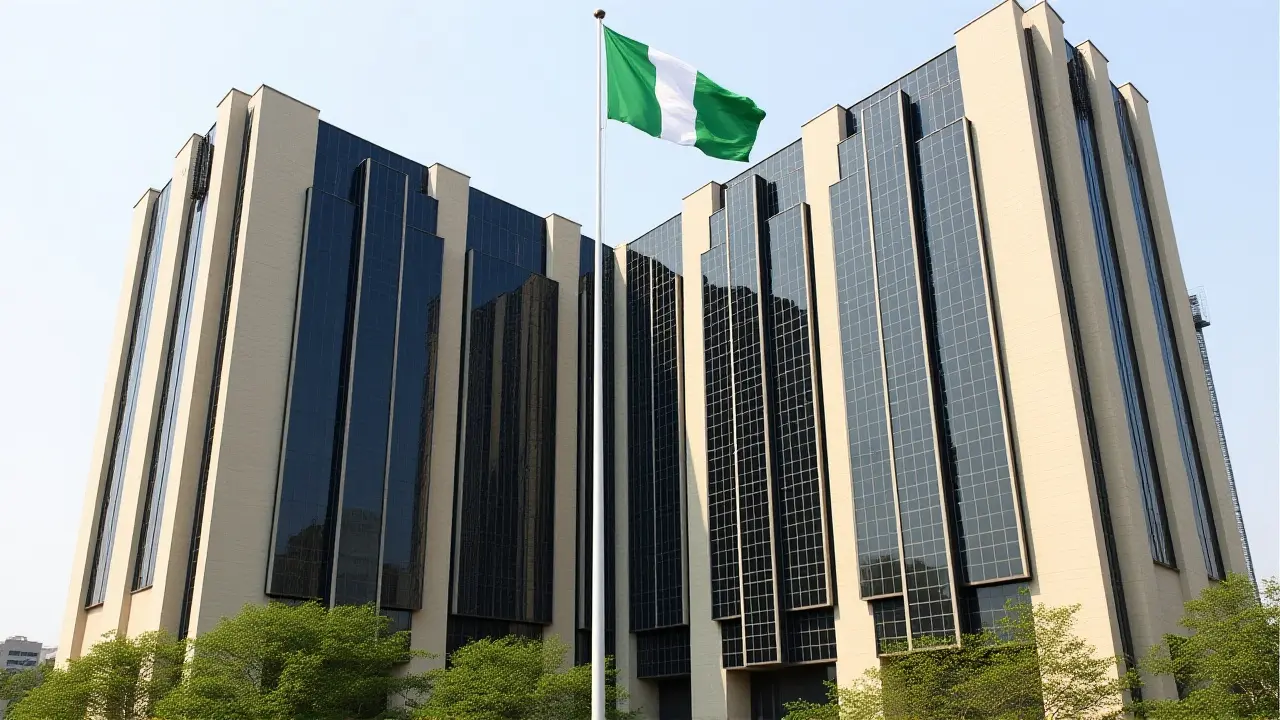
It’s a stark ultimatum from the top: keep your grip on your subsidiaries, or lose your license entirely. The Central Bank of Nigeria (CBN) has drawn a hard line in the sand for financial holding companies operating within the country. Under new proposed guidelines released in June 2026, holding companies must maintain controlling interest in their subsidiaries to retain their regulatory standing. Fail to do so, and the regulator is prepared to revoke licenses.
The announcement landed with a thud across Lagos’s financial district on 12 June 2026, sparking immediate debate among bankers, fintech founders, and legal experts. This isn’t just bureaucratic red tape; it’s a fundamental shift in how Nigeria’s largest financial conglomerates are allowed to operate. The stakes? Billions of naira in capital requirements and the very survival of some corporate structures.
A History of Tightening Screws
To understand why this matters now, you have to look back five years. On 3 August 2021, the CBN introduced its first comprehensive guidelines for payments-service holding companies (PSHCs). Those rules were designed to integrate the fragmented payments ecosystem, creating a clear licensing regime for entities that wanted to own multiple financial service providers under one roof.
Back then, the message was about structure and integration. But the underlying principle of control was already there. The 2021 guidelines explicitly stated that if a PSHC lost ownership or control of any two of its subsidiaries for more than six consecutive months, it would cease to be recognized as a holding company. The penalty? Mandatory license cancellation and forced divestment. It was a warning shot fired into the water, but many operators seemed to think they could navigate around it.
Turns out, the regulator didn’t forget. The 2026 exposure draft takes that specific clause and amplifies it, applying stricter oversight to all financial holding companies, not just those focused on payments. The logic is simple: if you’re going to hold the title of a major financial institution, you need to actually run the show, not just collect dividends while someone else makes the risky calls.
The New Rules of Engagement
The current proposal, published as an exposure draft on the CBN’s official website, invites stakeholders to submit comments by 9 July 2026. That gives the industry exactly 27 days to voice objections, ask questions, or lobby for changes. It’s a tight window, reflecting the urgency the central bank feels regarding systemic risk.
Here’s what the draft emphasizes:
- Control is Non-Negotiable: Holding companies must demonstrate active, controlling interest in subsidiaries. Passive ownership is no longer a shield against regulatory scrutiny.
- Capital Adequacy: The minimum paid-up capital for a holding company must exceed the sum of the required capital for all its subsidiaries. For example, if a company owns both a switching services operator and a mobile money operator (MMO), each requiring ₦2 billion, the parent must hold at least ₦4 billion in paid-up capital.
- Dividend Restrictions: No dividends can be paid until all losses are written off, capital obligations are met, and the CBN is satisfied with prudential compliance.
- Ownership Changes: Any shareholding change of 5% or more requires prior CBN approval. If bought on the secondary market, approval must be sought within seven days.
The twist is the emphasis on "active" management. The CBN wants to ensure that holding companies aren’t just shell entities parking assets. They want to see organizational structures, leadership training programs, and technical capabilities that prove the parent company is genuinely steering the ship.
Industry Reaction: Panic or Prudence?
Reactions have been mixed, ranging from cautious optimism to outright concern. Major newspapers like BusinessDay, Punch Newspapers, and Vanguard News have covered the story extensively, highlighting the phrase "maintain controlling interest or lose licence" as the core takeaway.
For large banks that have built complex holding structures over decades, this could mean painful restructuring. Some executives worry that the definition of "control" might be interpreted too broadly, forcing them to sell off profitable but non-core subsidiaries. Others argue that the rules are long overdue, citing past instances where weak oversight led to contagion risks when one subsidiary failed.
"The details are still unclear," admits one senior banking executive who requested anonymity. "But the signal is loud. The CBN is saying we can’t hide behind complex corporate veils anymore. If you own it, you’re responsible for it."
Why This Matters to You
You might wonder why a regulatory memo from Abuja affects your daily life. Here’s the thing: financial stability isn’t abstract. When holding companies are poorly regulated, failures can spread like wildfire, affecting savings, credit availability, and even job security in the broader economy.
By tightening these rules, the CBN aims to prevent another crisis similar to the mid-2000s banking consolidation era, where weak institutions dragged down stronger ones. Stronger oversight means fewer bailouts, which ultimately protects taxpayers and depositors. It also encourages healthier competition, as only well-capitalized, professionally managed groups will survive the new regime.
Moreover, this move aligns Nigeria with global best practices. Countries like the UK and US have strict ring-fencing and control requirements for financial conglomerates. Nigeria is catching up, albeit with its own local flavor.
What’s Next?
The clock is ticking. With the comment period closing on 9 July 2026, expect a flurry of submissions from industry bodies, law firms, and individual stakeholders. The CBN will review these inputs before finalizing the guidelines. Implementation won’t happen overnight—there will likely be a transition period for existing players to comply.
Watch for announcements in late Q3 2026 regarding the final version of the guidelines. In the meantime, holding companies are scrambling to audit their subsidiaries, review capital structures, and prepare for a more transparent future. The era of loose oversight is over. The question now is: who’s ready to adapt?
Frequently Asked Questions
When does the public comment period end?
Stakeholders have until 9 July 2026 to submit comments, questions, or objections to the Central Bank of Nigeria regarding the new financial holding company guidelines. This provides a 27-day window following the publication date of 12 June 2026.
What happens if a holding company loses control of a subsidiary?
Under the proposed rules, if a holding company loses ownership or control of its subsidiaries for more than six consecutive months, it risks losing its license. The company may be forced to divest wholly from the affected subsidiaries and cease operations as a recognized holding entity.
How much capital is required for a payments-service holding company?
The minimum paid-up capital must exceed the sum of the required capital for all subsidiaries. For instance, if a holding company owns a switching services operator and a mobile money operator, each requiring ₦2 billion, the parent company must hold at least ₦4 billion in paid-up capital.
Can holding companies pay dividends under the new rules?
Dividends are restricted. A holding company cannot pay dividends until all incurred losses are written off, capitalization obligations are fully met, and the CBN confirms that all prudential conditions have been satisfied.
Who regulates financial holding companies in Nigeria?
The primary regulator is the Central Bank of Nigeria, specifically through its Payments Systems Management Department. Other entities like the Securities and Exchange Commission (SEC) and Federal Inland Revenue Service (FIRS) also play roles in regulating shares, taxation, and corporate activities.
Abhijit Pawar
June 14, 2026 AT 03:33Stop hiding behind shell companies. If you can't control it, don't own it.
lavanya tolati
June 14, 2026 AT 10:26i feel for the small fintechs who just want to operate without getting crushed by these massive capital requirements
it feels like the game is rigged from the start for anyone not already in the inner circle
srinivasan sridharan
June 14, 2026 AT 23:36Oh how delightful that the CBN finally decided to act with a modicum of competence after five years of dithering.
One might have thought that basic oversight was part of the job description but apparently we must wait for an ultimatum to see any action taken
truly inspiring leadership indeed
Anant Kamat
June 16, 2026 AT 17:28honestly just watch and learn
see how they scramble to fix their balance sheets before the deadline hits
always entertaining to see big corps panic
Indrani Dhar
June 16, 2026 AT 22:49they are clearly trying to consolidate power under a few friendly oligarchs while pretending this is about stability
the whole narrative of systemic risk is a smokescreen for eliminating competition that doesn't kiss the ring
look at the dates look at the timing it's all orchestrated chaos designed to benefit those with deep pockets and connections to Abuja
you think they care about your savings? please.
they care about keeping their own seats warm while the rest of us drown in inflation and bad loans
Raja Meena
June 18, 2026 AT 19:17It is morally bankrupt to allow entities to profit from financial instruments they do not actively manage.
Their negligence has caused harm to many depositors over the years and now they face consequences which is only right and just.
I hope they suffer greatly for their past arrogance and lack of ethical responsibility towards the Nigerian public.
Pooja Kiran
June 18, 2026 AT 20:53Let's dissect the regulatory arbitrage here shall we?
The concept of passive ownership as a shield against prudential scrutiny was always a flawed construct within the modern banking framework.
By mandating active controlling interest the CBN is effectively forcing a recapitalization event that will purge the weaker players from the ecosystem.
This aligns with Basel III accords regarding ring-fencing and operational resilience which Nigeria has been lagging on for decades.
The dividend restriction clause is particularly astute as it prevents value extraction during periods of heightened systemic vulnerability.
Gaurav sharma
June 19, 2026 AT 15:29You people are missing the forest for the trees again.
This isn't just about rules it's about the fundamental decay of corporate governance in Lagos.
I've seen the internal memos I know exactly which subsidiaries are being used to park toxic assets and avoid tax liabilities.
The CBN knows too they're just waiting for the perfect moment to strike and let the market correct itself through forced liquidation.
It's brutal but necessary surgery on a cancerous system that has been bleeding the economy dry for years.
Megha Khairnar
June 20, 2026 AT 00:38Perhaps there is wisdom in this approach if viewed through the lens of long-term sustainability rather than short-term profit.
We must consider the philosophical implications of control versus ownership in a digital age where value is often intangible.
Yet one cannot ignore the aggressive tone which suggests a lack of trust between regulator and regulated.
Maybe dialogue could have achieved the same result without such draconian measures?
Twinkle Vijaywargiya
June 20, 2026 AT 23:52I believe this is a positive step towards transparency!; however, I wonder if smaller firms will get adequate support during the transition period?
It is crucial that we ensure no one is left behind in this push for excellence!; collaboration between industry bodies and the CBN would be beneficial here!
Swetha Sivakumar
June 22, 2026 AT 18:50just chilling and watching the drama unfold
guess the suits are sweating bullets right now
hope they have enough cash to meet those new requirements
diksha gupta
June 23, 2026 AT 07:46it's actually quite refreshing to see some teeth in the regulations
maybe this will finally clean up the mess we've had for years
fingers crossed for better stability ahead
Sai Krishna Manduva
June 23, 2026 AT 13:17One might argue that true freedom lies in the absence of regulation yet here we are witnessing the opposite extreme.
Is it possible that the CBN is merely shifting the burden of failure from themselves to the private sector?
After all if the banks fail due to strict rules then the regulator can claim victory in enforcement rather than admitting systemic flaws.
A curious paradox indeed.
Siddharth SRS
June 25, 2026 AT 02:25In light of the aforementioned directives issued by the Central Bank of Nigeria concerning the stringent requirements imposed upon financial holding companies regarding their subsidiary management structures and capital adequacy ratios which necessitate a comprehensive reevaluation of existing corporate hierarchies and strategic alignments within the broader financial ecosystem of the nation one must acknowledge the profound implications these measures hold for both institutional stakeholders and individual investors alike who may find themselves adversely affected by the potential restructuring or dissolution of certain entities that fail to comply with the newly established regulatory frameworks thereby leading to a significant contraction in market liquidity and increased volatility across various sectors of the economy which could potentially trigger a cascade of negative outcomes including but not limited to reduced employment opportunities diminished consumer confidence and a general decline in economic growth metrics that have been painstakingly built up over the preceding decade of relative stability and progress within the Nigerian financial landscape.
Anoop Sherlekar
June 26, 2026 AT 17:14Let's go team!! 💪
Time to show them what real strength looks like!
Adapt and overcome!! 🚀
Navya Anish
June 27, 2026 AT 17:28Typical Western-style interference disguised as local policy!
They want to crush our indigenous business models because they can't compete with global giants.
This is economic imperialism at its finest!
We should reject these guidelines entirely and build our own sovereign financial system free from foreign influence!
Shame on the CBN for bowing down to international pressure!
Subramanian Raman
June 29, 2026 AT 16:44I'm curious about the impact on cross-border transactions though 😊
Will this make it harder for Indian tech firms partnering with Nigerian banks to maintain their stakes?
Just wondering how this affects global collaborations in fintech space 🤔