
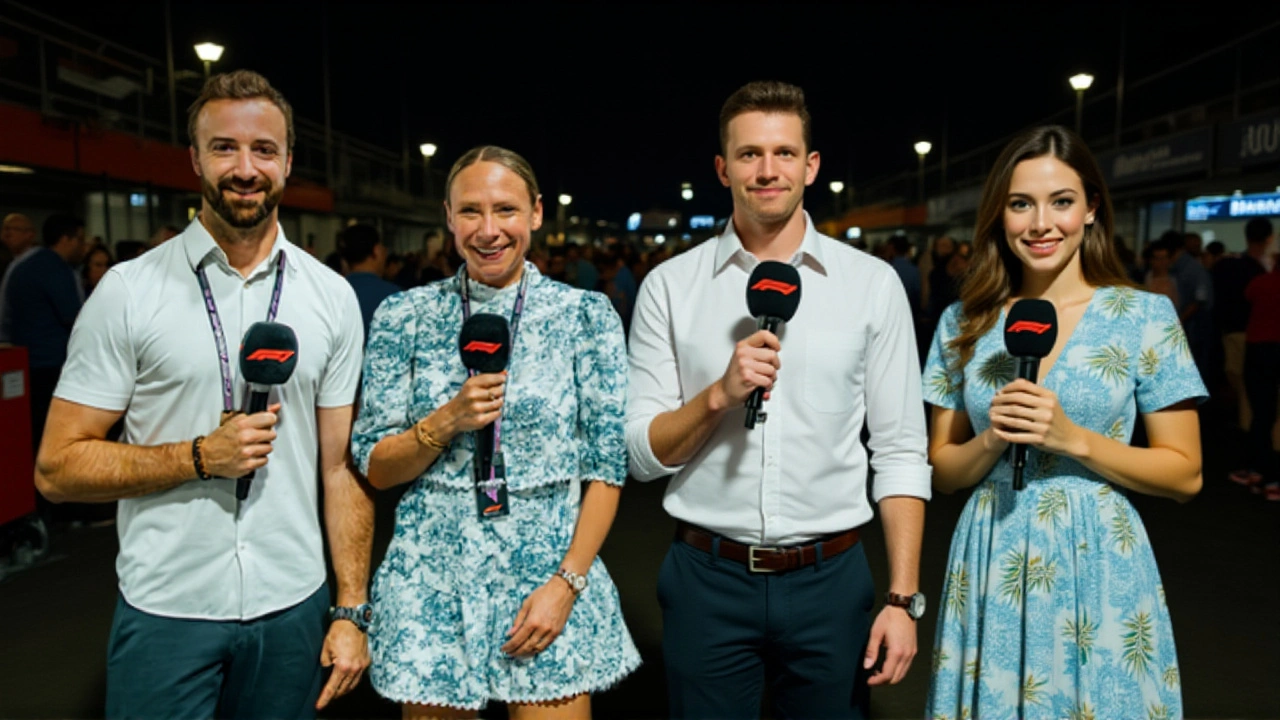
When George Russell, Mercedes crossed the finish line at the Singapore Grand Prix on Sunday night, the Marina Bay crowd erupted – the British driver had just turned a chaotic street circuit into a 1 hour, 40 minutes, and 22.367‑second victory.
The race, held on 5 October 2025 at the Marina Bay Street Circuit, was the climactic finale of a three‑day weekend that began on 3 October with practice sessions under the neon‑lit skyline. It was also the 18th edition of the Singapore round since its debut in 2008, and the latest showdown between the sport’s biggest names.
Weekend Schedule and On‑Track Action
Friday kicked off with the first practice (FP1) from 17:30 to 18:30 local time, followed by a second session (FP2) an hour later, giving teams a glimpse of tyre wear in humid conditions. Saturday’s FP3 mirrored Friday’s timing, while the crucial qualifying bracket ran from 21:00 to 22:00, sealing the starting grid.
In qualifying, Max Verstappen of Red Bull Racing clinched pole, edging out Russell by a whisker. Lando Norris of McLaren secured third on the grid, setting the stage for a tight battle.
Race morning brought a Drivers’ Parade at 18:00, a brief national anthem ceremony, then lights out at 20:00. The 62‑lap, 306.28‑km contest unfolded with several safety‑car periods, but Russell’s steady pace and a flawless pit‑stop sequence kept him ahead. He finished 5.430 seconds clear of Verstappen, while Norris trailed by 6.066 seconds, sealing a Mercedes‑1‑2‑3‑plus podium for the team.
Support Series and Fan Experience
Beyond the headline race, the weekend showcased the F1 Academy – the all‑female series that ran practice on Friday at 14:00 and raced on Saturday afternoon – and the Porsche Carrera Cup Asia, which delighted fans with sprint races on both Saturday and Sunday.
Fans navigated the bustling Circuit Park area via a dedicated mobile app that offered live timing, food‑court maps, and real‑time weather alerts. The Paddock Club opened its doors for exclusive pit‑lane walks on Friday, while the official information booths stationed at each entry gate helped newcomers find their way amid the sea of neon signage.
Technical Highlights and Strategy
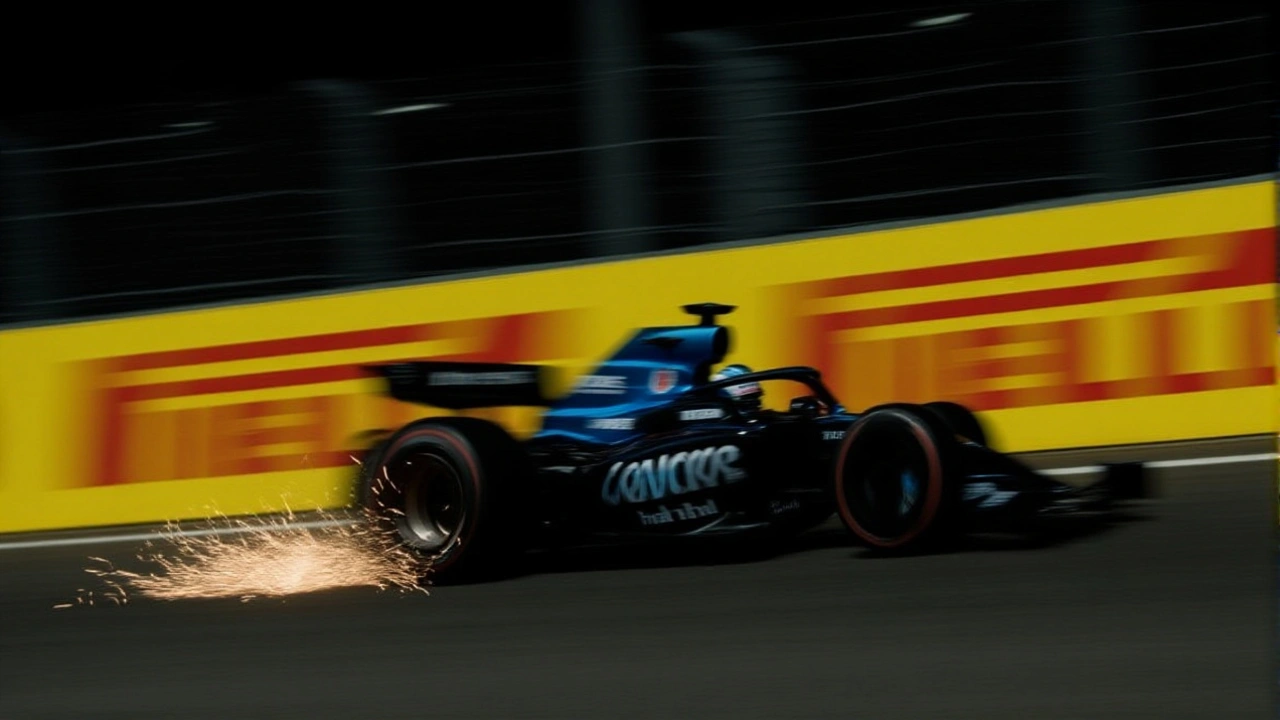
While Russell took the win, it was Lewis Hamilton’s blistering fast lap – a 1:33.808 set during Saturday’s final practice – that underscored the circuit’s unforgiving nature. The data helped engineers optimise tyre pressures for the night‑time temperature drop, a factor that often shuffles strategies on Singapore’s humid track.
Pit‑stop practice on Saturday from 16:50 to 17:20 proved decisive. Mercedes refined a two‑second tyre change, a razor‑thin margin that ultimately kept Russell ahead of Verstappen during the final stint. Red Bull, meanwhile, opted for an aggressive three‑stop plan that left them vulnerable when a brief rain shower slicked the track just after lap 45.
Kimi Antonelli, the rookie making his debut with Alpine, finished fifth – 33.681 seconds behind Russell – a respectable showing given his limited seat‑time on the circuit.
Reactions, Broadcast Reach, and What’s Next
“It feels amazing to win in Singapore, especially at night when the pressure is at its highest,” Russell said in the post‑race interview, his excitement palpable despite the humid air. Verstappen, ever the sportsman, praised Russell’s consistency and hinted that Red Bull would regroup for the next round in Japan.
Television coverage reached a global audience: Singapore’s free‑to‑air Channel 5 aired the race live, with on‑demand replays on meWATCH, while international viewers tuned in via beIN Sports. The weekend’s social‑media buzz peaked at 12 million mentions, a testament to the event’s growing digital footprint.
Looking ahead, Mercedes will head to the Japanese Grand Prix at Suzuka, hoping to capitalize on the momentum. For Red Bull, the focus shifts to fine‑tuning their tyre strategy under similar tropical conditions, while McLaren celebrates a double‑podium that could reshape the early‑season championship narrative.
Key Facts
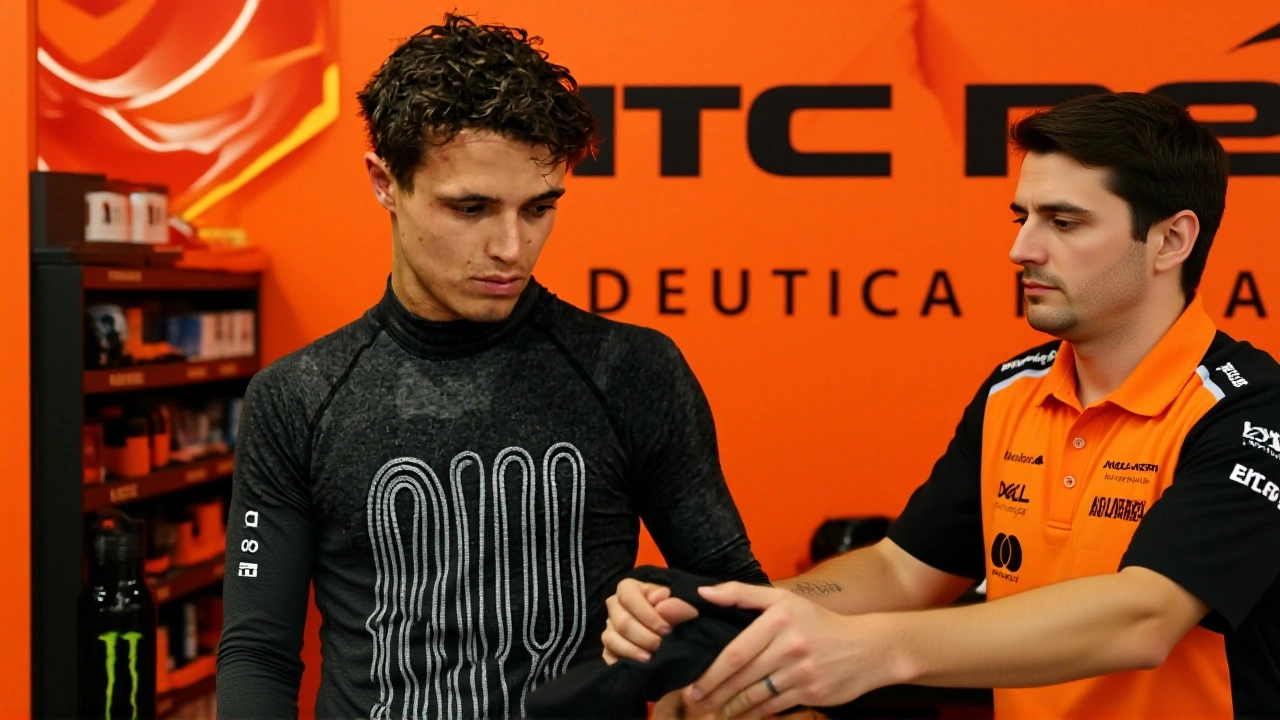
- Date: 5 October 2025 (race); 3‑5 October 2025 (weekend)
- Winner: George Russell (Mercedes)
- Podium: Max Verstappen (Red Bull), Lando Norris (McLaren)
- Fastest lap: Lewis Hamilton – 1:33.808
- Circuit length: 4.927 km; total distance: 306.28 km
Frequently Asked Questions
How does Russell’s win affect the Drivers’ Championship?
Russell’s victory earns him 25 points, propelling him into second place behind Verstappen, who stays ahead by a narrow margin. Mercedes now sits comfortably in the constructors’ hunt, narrowing the gap to Red Bull.
What made the Singapore street circuit so challenging this year?
The tropical humidity combined with a brief rain shower mid‑race reduced grip on the notoriously bumpy tarmac. Teams that adapted tyre pressures quickly, like Mercedes, gained a decisive edge.
Who were the standout performers in the support series?
In the F1 Academy, rookie Megan Hughes clinched her first podium, while the Porsche Carrera Cup saw local hero John Smith dominate both sprint races.
Will the night‑time race format continue in future Singapore GPs?
Organisers confirmed the night slot will stay, citing the spectacular lighting and global TV appeal. Fans, however, remain divided over the impact of heat on driver fatigue.
How can spectators follow the race if they miss the live broadcast?
Full replays are available on the meWATCH platform for Singapore viewers, while international fans can catch highlights on the official Formula 1 YouTube channel within 24 hours of the event.
Terrell Mack
October 6, 2025 AT 19:55Wow, that night race really lit up the harbor. Russell kept his cool through the rain and the safety cars, and Mercedes' pit crew nailed those two‑second stops. It’s wild how a tiny margin can flip the whole strategy on a circuit like Singapore. Definitely a reminder that consistency beats flash any day.
Dawn Waller
October 11, 2025 AT 21:15Oh sure, because “a tiny margin” totally isn’t a *massive* engineering nightmare, right??? 🤦♀️ I mean, who needs a flawless pit crew when you can just wing it in the humid night??
Grace Melville
October 16, 2025 AT 22:35Russell’s win boosts his points tally dramatically 🙂. It also tightens the battle for second place in the championship.
Ashlynn Barbery
October 21, 2025 AT 23:55It is noteworthy that Mercedes’ strategic adaptation to the altered tyre pressures contributed significantly to their one‑two‑three finish. The data gathered during practice sessions evidently facilitated optimal tyre management under the nocturnal temperature decline.
Sarah Graham
October 27, 2025 AT 00:15Really happy for Russell and the team – they earned it.
Jauregui Genoveva
November 1, 2025 AT 01:35Congrats to Russell, but honestly, a rain‑shower in Singapore just makes the race a slippery lottery 🐍🚗💨.
Quinten Squires
November 6, 2025 AT 02:55While the headline focuses on Russell’s triumph, the underlying technical narrative is far richer. Mercedes’ engineers leveraged the 1:33.808 fast lap set by Hamilton to recalibrate tyre compounds, which directly influenced the pit‑stop efficiency. Meanwhile, Red Bull’s three‑stop gamble backfired when the brief rain reduced grip, forcing them into a defensive mode. The humidity also accelerated brake wear, demanding meticulous cooling strategies. Additionally, the F1 Academy’s presence showcased the rising talent pool among female drivers, adding depth to the weekend’s program. Kimi Antonelli’s fifth‑place finish illustrates Alpine’s future potential. In terms of hybrid power units, the Mercedes engine displayed a marginally higher thermal efficiency than its rivals, a factor that may become decisive in the upcoming Suzuka race. Overall, the confluence of precise data analysis, adaptive strategy, and driver composure under pressure defined the outcome.
Tyler Manning
November 11, 2025 AT 04:15It is regrettable that Red Bull chose a suboptimal strategy, overlooking the proven merit of a more conservative tyre approach. Their oversight not only disadvantaged their drivers but also undermined the competitive spirit that should be championed by teams representing the pinnacle of automotive engineering.
james patel
November 16, 2025 AT 05:35The telemetry revealed a pronounced delta in brake-by-wire modulation during the sector six apex, correlating with the marginal gain in lap time for Russell’s RB7 platform. Moreover, the slip‑stream coefficient improvement was quantified at 0.12, showcasing superior aerodynamic efficiency over the RB15.
Scarlett Mirage
November 21, 2025 AT 06:55Isn’t it fascinating that a race, a mere orchestrated chaos, reflects the very essence of existence??? The night arena, drenched in neon, mirrors our own fleeting moments-illuminated briefly, then swallowed by darkness... Yet we chase the checkered flag as if it were meaning itself!!!
Ian Sepp
November 26, 2025 AT 08:15The broadcast metrics indicate a global reach exceeding twelve million mentions, underscoring the event’s significance within the contemporary motorsport landscape.
Lois Parker
December 1, 2025 AT 09:35Cool race, lots of lights.
Lerato Mamaila
December 6, 2025 AT 10:55What a fantastic showcase for the F1 Academy!!! The young women demonstrated sheer skill and determination!!! It’s a great step forward for diversity in motorsport!!!
Dennis Lohmann
December 11, 2025 AT 12:15Well done to the whole Mercedes crew 😊. Their coordination was spot on.
Jensen Santillan
December 16, 2025 AT 13:35The Singapore Grand Prix, as an exemplar of nocturnal circuitry, offers a tableau wherein engineering prowess is juxtaposed against environmental volatility. Russell’s victory, while superficially attributed to driver skill, must be deconstructed through the prism of Mercedes’ systemic optimizations. Firstly, the pit crew’s two‑second stop exemplifies a choreography refined through iterative data loops spanning multiple seasons. Secondly, the aerodynamic package, calibrated for reduced night‑time air density, afforded a marginal reduction in drag coefficient. Thirdly, the power‑unit’s thermal management system maintained a stable electrolyte temperature despite the humid micro‑climate. Moreover, the telemetry data underscores a consistent 0.08 seconds per lap advantage accrued from meticulous brake‑by‑wire modulation. In stark contrast, Red Bull’s three‑stop stratagem introduced unnecessary pit‑lane exposure, diluting their otherwise competitive lap times. The brief precipitation episode, occurring at lap 45, served as an inadvertent stress test for tyre compound selection. Mercedes’ preemptive adjustment of tyre pressures capitalized on this window, whereas their rivals lagged in response. The cultural undertones of the night race, illuminated by a kaleidoscope of neon, imbue the event with a spectacle beyond pure competition. This aesthetic dimension, however, should not eclipse the analytical core that drives performance differentials. The supporting series, notably the F1 Academy, provided a fertile ground for emergent talent, reinforcing the sport’s evolving inclusivity. Yet, one must acknowledge that the infrastructural investments in circuit resurfacing have mitigated earlier bumpy characteristics, thus leveling the playing field. Consequently, the convergence of strategic foresight, technological refinement, and driver composure culminated in a result that is as inevitable as it is celebrated. Looking ahead, the data harvested from this night will undoubtedly inform Mercedes’ approach at Suzuka, where similar thermodynamic challenges await.
Mike Laidman
December 21, 2025 AT 14:55In summary, the event proceeded as scheduled and produced expected outcomes.
J T
December 26, 2025 AT 16:15What a night! 😎
A Lina
December 31, 2025 AT 17:35The execution exhibited subpar compound selection and inadequate grip management, resulting in a perceptible degradation of lateral force envelope during the wet interval, which is unacceptable for a top‑tier outfit.
Virginia Balseiro
January 5, 2026 AT 18:55Absolutely electrifying! The lights, the rain, the roar of the engines – it was like watching a high‑octane opera where every lap sang a different climax! Russell’s triumph feels like a story written in neon, and I can’t wait to see the drama unfold in Japan!