
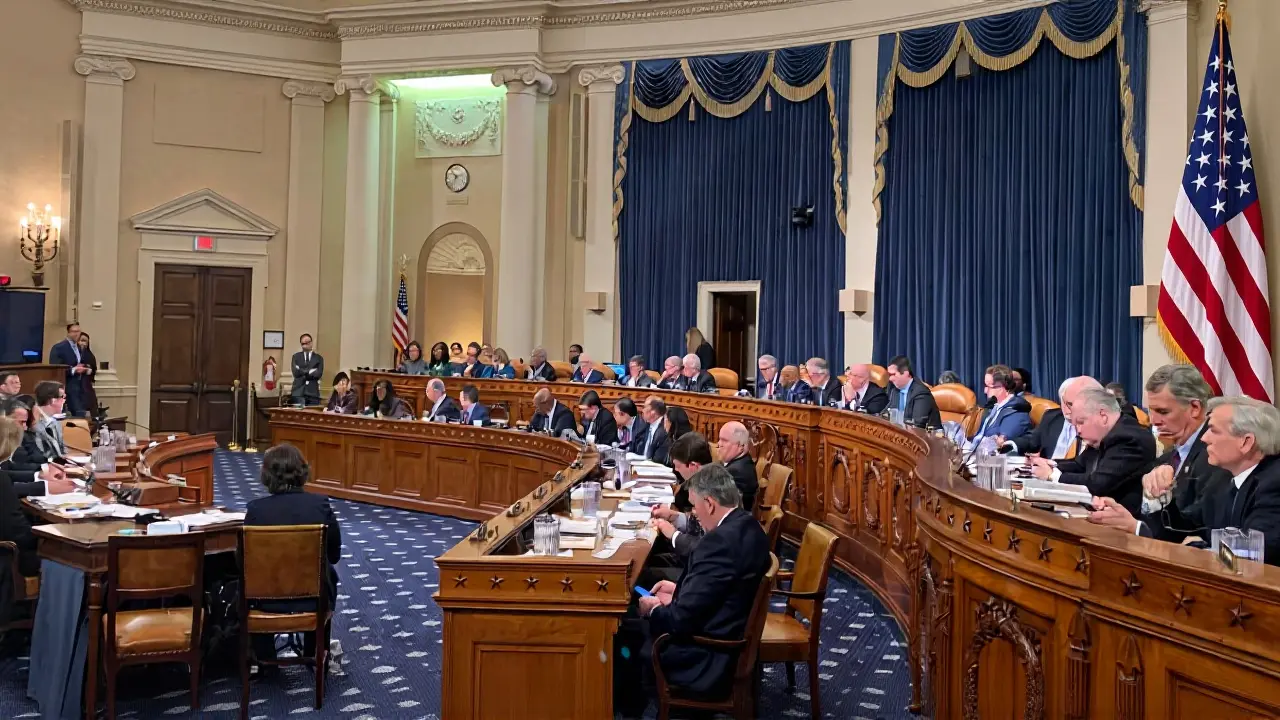
Washington’s tax-writing power brokers are finally moving the needle on one of the most chaotic corners of the financial world. The House Ways and Means Committee is preparing to drop a seven-bill legislative package this Friday that would fundamentally rewrite how cryptocurrencies are taxed in the United States.
The move comes after years of ambiguity for investors who have been left guessing whether mining rewards or staking income counts as taxable events. With a formal hearing scheduled for early next week, the committee aims to bring digital assets into line with traditional securities—a shift that could reshape the entire crypto industry by June 2026.
A Seven-Part Legislative Package
Here’s the thing: this isn’t just one bill. According to two people familiar with the matter, the committee is releasing seven separate measures. This modular approach suggests lawmakers are trying to tackle specific pain points rather than dumping a massive, unmanageable omnibus bill onto the floor.
The core focus? Timing. Specifically, when does a digital token become taxable? The legislation will address tokens created through mining and rewards collected from staking—where users temporarily lock up tokens to help secure a blockchain network. For years, the IRS has treated these activities inconsistently, leaving miners and validators in a gray area. The new rules aim to clarify exactly when those coins hit your taxable income bucket.
Parity with Traditional Securities
But wait, there’s more. The proposed measures aren’t just about fixing timing issues; they’re about leveling the playing field. The bills seek to bring parity between the tax treatment of digital assets and traditional securities.
This includes significant changes for charitable donations. Currently, donating crypto can be a tax nightmare compared to donating stocks. The new framework would align these treatments, making it easier for philanthropists to give without triggering complex capital gains calculations. It also introduces safe harbors for foreign investors, allowing them to trade U.S. securities—and now potentially digital assets—without being taxed as if they were running a domestic business.
Perhaps most controversially, the package extends "wash sale" restrictions to digital assets. If you’ve ever sold a stock at a loss only to buy it back weeks later, you know the drill: the IRS bars you from claiming that loss if you repurchase a substantially similar asset within 30 days. Until now, crypto traders have largely flown under this radar. That loophole is closing.
Senate Action and Bipartisan Efforts
While the House makes headlines, action is brewing across the Capitol. Top Republican and Democratic tax writers in the Senate are working on their own legislation to address digital asset taxation. While details remain scarce, the bipartisan nature of the effort signals that crypto regulation is no longer a partisan football—it’s a necessary cleanup job.
The coordination between chambers is rare in today’s polarized environment. It suggests both parties recognize the revenue potential and compliance risks of ignoring the multi-trillion-dollar crypto market. However, differences in approach may emerge during negotiations, particularly regarding the scope of enforcement powers.
Why This Matters to You
If you hold Bitcoin, Ethereum, or any altcoin, pay attention. The extension of wash sale rules alone could impact thousands of traders who rely on short-term trading strategies to manage their portfolios. Suddenly, every quick flip needs careful accounting.
For everyday investors, the clarity around staking and mining rewards means fewer surprises come April 15th. No more debating whether your validator node’s payout is ordinary income or a capital gain event. The government wants its share, and it wants clear rules to collect it.
The timeline is tight. Bills due Friday. Hearing next week. This speed indicates urgency, possibly driven by upcoming elections or pressure from industry lobbyists seeking certainty. Whatever the motive, the era of regulatory ambiguity for crypto taxes is ending faster than many expected.
Historical Context: From Wild West to Regulated Market
Remember when Bitcoin was worth $4,000? Back then, few taxpayers even reported their holdings. Today, with institutional adoption and ETF approvals, the IRS is catching up. Previous attempts to regulate crypto faced backlash for being too vague or overly punitive. This seven-bill approach seems designed to avoid those pitfalls by addressing specific technicalities rather than broad strokes.
Experts note that previous guidance from the IRS in 2014 treated virtual currency as property, leading to the current patchwork of rules. This new legislation effectively updates that 12-year-old framework for a modern digital economy. It’s not revolutionary, but it’s necessary.
Frequently Asked Questions
What exactly are wash sale rules, and how do they apply to crypto?
Wash sale rules prevent investors from claiming a tax loss on a security if they buy back a "substantially identical" asset within 30 days before or after the sale. Previously, these rules applied only to stocks and options. Under the new proposed legislation, selling Bitcoin at a loss and buying it back within 30 days would disqualify you from deducting that loss on your tax return, just like with traditional stocks.
How will staking rewards be taxed under the new plan?
The legislation aims to clarify when staking rewards—tokens earned by locking up crypto to support a network—are considered taxable income. Currently, there is debate over whether they are taxed upon receipt or upon sale. The new bills are expected to define a specific trigger point, likely treating them as ordinary income when received, similar to interest or dividends.
When will these new tax laws take effect?
The House Ways and Means Committee plans to release the seven bills this Friday, June 5, 2026, followed by a formal hearing early next week. However, passage into law requires approval from both the House and Senate, plus presidential signature. Most experts expect implementation to occur in the following tax year, giving investors time to adjust their strategies.
Does this affect foreign investors trading U.S. crypto?
Yes. The proposed measures include safe harbors that allow foreign investors to trade U.S. securities without being taxed as a domestic business. Extending this to digital assets means non-U.S. residents may face fewer withholding taxes and reporting burdens when trading crypto on U.S.-based platforms, provided they meet certain criteria defined in the legislation.
Are Democrats and Republicans united on this issue?
Reports indicate that top tax writers from both parties in the Senate are working on parallel legislation. While specifics differ, the bipartisan engagement suggests a shared recognition that the current lack of clarity hurts compliance and revenue collection. However, ideological differences may surface during negotiations over enforcement mechanisms and penalty structures.
Anoop Sherlekar
June 7, 2026 AT 05:42Finally some clarity! This is huge news for the crypto community. I've been waiting for this kind of structure for years. It's going to make tax season so much less stressful for everyone involved. Let's go! :D
Shreyanshu Singh
June 7, 2026 AT 22:03oh great another way for the government to squeeze us dry... they call it 'clarity' but i see it as a trap door for our wallets. the wash sale rule is just a way to punish people for trying to manage their own losses. typical washington move, always looking for more revenue while pretending to help.
Sohni Bhatt
June 8, 2026 AT 16:11It is absolutely fascinating to observe how the legislative bodies are finally attempting to impose order upon what has essentially been a chaotic and unregulated frontier of financial speculation, which frankly, has long overdue for such intervention given the sheer scale of assets now held in these digital currencies by both retail and institutional investors who have largely operated with impunity until now. The extension of wash sale rules is particularly significant because it eliminates a major arbitrage opportunity that was previously exploited by sophisticated traders who understood the loopholes in the current IRS guidance, thereby leveling the playing field for those who adhere strictly to traditional securities regulations and ensuring that no one gets an unfair advantage through technicalities that were never intended to be part of the original tax code framework designed for tangible assets rather than intangible digital tokens.
Prashant Sharma
June 8, 2026 AT 18:49The pretense of 'parity' is amusing when you consider that equating digital assets with traditional securities ignores the fundamental technological differences that define blockchain networks. Staking rewards are not dividends; they are protocol incentives for network security, yet treating them as ordinary income upon receipt disregards the economic reality of holding illiquid or volatile assets before any gain is realized. This legislation seems driven by fiscal necessity rather than logical consistency, creating a patchwork of rules that will likely lead to more litigation than compliance.
Mike Gill
June 10, 2026 AT 07:19I think this is actually good news even if it feels scary at first. Having clear rules means we dont have to guess anymore and that reduces stress for sure. I know many people are worried about the wash sale thing but once we learn the new system it will be easier to plan ahead. We should all try to stay positive and adapt to the changes together.
Gaurav Jangid
June 10, 2026 AT 11:04Oh my gosh!!! Can you believe this is happening?!? The whole world is changing right before our eyes!!! Crypto is finally getting the respect it deserves!!! Or maybe the hammer it fears most!!! Who knows?!? But seriously, this is wild stuff!!! I am shaking with excitement!!! :O :D :P
Ghanshyam Gohel
June 10, 2026 AT 23:26It is important to note that the bipartisan nature of this effort suggests a broader consensus on the need for regulatory clarity. While some may view this as restrictive, others see it as a necessary step towards mainstream adoption. The safe harbors for foreign investors are also a crucial component that could enhance global liquidity.
Nathan Lemon
June 11, 2026 AT 12:08This development marks a significant milestone in the evolution of digital asset regulation. By aligning crypto taxation with traditional securities frameworks, the government aims to foster greater transparency and accountability within the market. Investors should take note of these changes as they prepare for the upcoming fiscal year.
Abhijit Pawar
June 11, 2026 AT 17:57Wash sale rules are coming. Prepare your portfolios.
lavanya tolati
June 12, 2026 AT 08:29it is interesting to see how different cultures approach financial regulation. in india we have our own challenges with crypto taxes but seeing the US move forward might inspire similar clarity here. hope it helps everyone navigate this complex space better.
Subramanian Raman
June 12, 2026 AT 15:48One must wonder about the philosophical implications of taxing something that exists only as code. Is it property or currency? The ambiguity reflects our collective struggle to understand value in the digital age. Perhaps the true cost is not monetary but the loss of privacy and autonomy we surrender to state oversight. :/
Sanjay Kumar
June 14, 2026 AT 08:12Look, change is hard but necessary. If we want crypto to be taken seriously by institutions, we need these rules. It's like growing up eventually. You have to follow the laws of society. So let's embrace the clarity and build from there. Stay strong folks.