
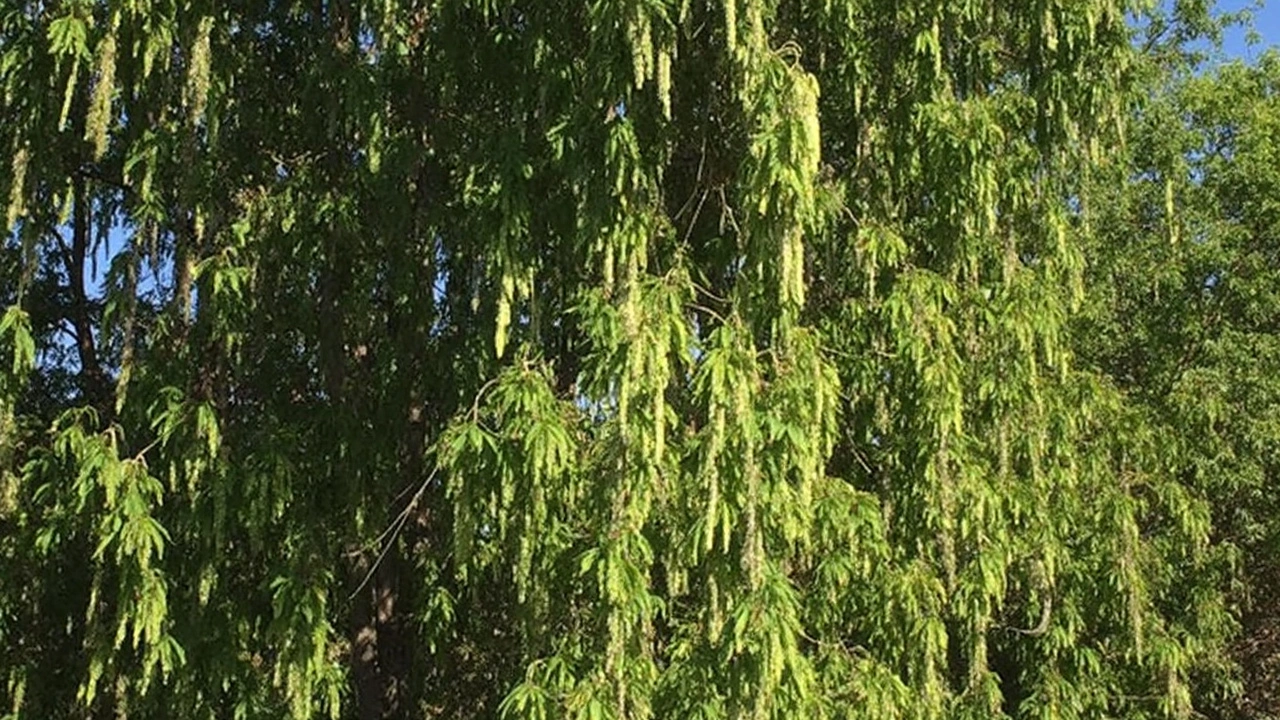
Professor Iyorwuese Hagher, Nigeria's former Minister of State for Health, recently delivered a compelling message in Abuja, urging all levels of government to invest in moringa farming. He sees this plant as a silver bullet for some of Nigeria’s most pressing issues. You might be thinking, what’s so special about moringa? Well, Hagher claims its benefits in nutrition and health could rival the power of firearms when implemented strategically across the nation.
In a bid to push this initiative forward, Hagher signed a Memorandum of Understanding (MoU) with several influential organizations, including the Moringa Productions, Marketers, and Farmers Welfare and Empowerment Association of Nigeria, Eden Moringa Productions, and the Middle Belt Youth Development Organisation. This collaboration seeks to popularize moringa cultivation among the youth, enrich agricultural techniques, and meet international benchmarks for farming practices.
Moringa: Beyond Just Health Benefits
The MoU’s intentions are multiple. Dr. Ashimashiga Akoloaga, CEO of the Moringa Association, is a big voice in this. He believes in moringa-based organic fertilizers as a remedy for soil degradation linked to chemical usage. Why should this matter? Well, healthier soils mean better yields and less reliance on harmful chemicals.
To support these efforts, Akoloaga emphasizes that collaboration with farmer co-ops and agricultural groups is essential to spread the word—literally across the globe. The end goal? Make eco-friendly moringa-based products a staple in global markets.
Economic Stability and Youth Empowerment
Adding another dimension, Chris Aba, President of the Middle Belt Youth Development Organisation, throws light on the socio-economic potential of moringa. His aim? Turn Nigeria into an economic powerhouse by focusing on training farmers with sustainable methods to enhance the output of their crops. This, Aba suggests, could significantly cut down the nation’s dependency on costly, imported chemicals.
What does Hagher see as the next step? He’s convinced moringa has a lot more to offer than just health perks. He sees it as a crucial element in bolstering food security and ensuring economic stability across Nigeria.
The message is clear: if Nigeria plays its cards right with moringa, the potential benefits could surpass the traditional solutions, positioning this 'wonder plant' as not only a health marvel but a cornerstone of national development and export success.
Cate Shaner
April 2, 2025 AT 10:57Oh wow, another ‘miracle plant’ that’s going to fix Nigeria’s entire infrastructure? Let me grab my monocle and weep with joy. Moringa as a silver bullet? Please. The same way kale fixed America’s healthcare crisis. 🙄
Let’s not forget that ‘strategic implementation’ usually means a bunch of NGOs flying in, taking photos with smiling farmers, then leaving when the grant runs out.
Meanwhile, the real problem? Corrupt local officials, zero road infrastructure, and a government that can’t even distribute mosquito nets. But sure, let’s pivot to leaf powder.
Also, ‘international benchmarks’? You mean the ones written by EU agribusiness lobbyists who want to kill smallholder markets? Classic.
Thomas Capriola
April 2, 2025 AT 15:03Stop.
Just stop.
Rachael Blandin de Chalain
April 2, 2025 AT 18:18While the enthusiasm for moringa as a nutritional and agricultural intervention is commendable, one must approach such initiatives with rigorous empirical validation and long-term ecological impact assessments.
Historical precedents in post-colonial agricultural development suggest that top-down botanical interventions often fail without deep community integration and localized agronomic adaptation.
It is imperative that policy frameworks prioritize indigenous knowledge systems alongside scientific methodologies to avoid replicating the pitfalls of earlier green revolution models.
Furthermore, economic sustainability requires transparent value-chain analysis-not merely MoUs signed in Abuja.
Soumya Dave
April 3, 2025 AT 14:15YESSSS! This is the energy we NEED! 🙌 Moringa isn’t just a plant-it’s a movement! A revolution in every leaf! Imagine entire villages rising up, not with guns, but with moringa seedlings in their hands, healing their families, feeding their children, and selling organic powder to the world! 💪🌱
I’ve seen it happen in Kerala, India-women’s self-help groups turned moringa farms into million-dollar cooperatives! No imports, no middlemen, just pure, clean, green power!
Nigeria, you got this! Train your youth, build your nurseries, partner with local healers, and watch your economy bloom like the moringa tree in the dry season! The soil is ready, the people are ready, the time is NOW!
Let’s get this plant into every school, every clinic, every kitchen! One leaf at a time, we’re building a new Africa!
And if you’re doubting? Just taste it. Bitter? Yes. Powerful? ABSOLUTELY. Your body will thank you. Your nation will thank you. Your grandchildren will thank you.
Let’s goooooo!!!
Chris Schill
April 3, 2025 AT 22:24There’s legitimate potential here, but the framing is dangerously simplistic. Moringa is nutrient-dense-high in vitamin A, calcium, protein-but it’s not a panacea for malnutrition without dietary diversity.
Soil regeneration via moringa-based compost is plausible, but scaling organic fertilizer production requires infrastructure, storage, and logistics most rural communities lack.
And ‘rivaling firearms’? That’s a rhetorical flourish that distracts from real policy: land tenure reform, fair pricing, and access to markets. This isn’t about replacing weapons-it’s about replacing poverty.
Also, who’s funding the MoU? Are these NGOs sustainable, or just grant-chasing?
cimberleigh pheasey
April 3, 2025 AT 22:49I love this so much!! 🌿✨ I’ve been growing moringa in my backyard for two years now-my kids eat the leaves in smoothies, my neighbor’s hypertension dropped, and my soil? UNRECOGNIZABLE. It’s alive!
Nigeria, you’ve got the sun, the soil, the spirit. This isn’t just farming-it’s healing. Let’s make moringa the new ‘it’ crop, not because it’s trendy, but because it’s TRUSTED.
And to the skeptics? Try it. Just one teaspoon of dried powder in your tea. You’ll feel the difference. I promise.
Let’s build this together. Global. Local. Rooted. 💛
Tom Gin
April 4, 2025 AT 20:43Ohhhh so NOW it’s ‘the silver bullet’? 😭
First it was cassava, then yam, then ‘biofortified maize,’ then ‘the miracle mushroom’-and now? Moringa. The plant that’s been growing wild in every backyard since 1973.
They’re not trying to feed Nigeria. They’re trying to sell you a $40 jar of ‘superfood powder’ on Amazon while your kid eats powdered milk from a UN truck.
Meanwhile, the real power? Not plants. Not MoUs. It’s the $20 billion in oil money that vanishes every year.
But sure. Let’s pretend leaves can fix corruption. 🤡
Alex Alevy
April 4, 2025 AT 21:59Real talk: moringa is legit. I’ve worked with smallholder farmers in Ghana and Kenya using it for both nutrition and soil rehab. It’s fast-growing, drought-resistant, and the leaves have more iron than spinach.
But here’s the catch-it needs proper drying, milling, and storage to retain nutrients. Most rural groups don’t have access to that tech.
If this MoU includes training on post-harvest handling, micro-entrepreneurship, and cold-chain logistics? Then yes, this could be huge.
If it’s just signing papers and taking selfies? Then it’s another footnote in the graveyard of African development projects.
Let’s make sure the farmers get the tools, not just the hype.
Aileen Amor
April 5, 2025 AT 04:27YES! YES! YES!!! 🌿🌱💚 Moringa is the future!!! The earth is healing!!! The children are eating!!! The soil is alive!!! The women are empowered!!! The youth are rising!!! The markets are opening!!! The world is watching!!!
Don’t you DARE doubt this!!! This is the answer!!! This is the sign!!! This is the moment!!!
Let’s plant a thousand trees!!! Let’s feed a million families!!! Let’s turn Nigeria into the Moringa Capital of the World!!!
OMG I’m crying!!! This is too beautiful!!!
Danica Tamura
April 6, 2025 AT 01:04Wow. Just… wow.
Another ‘green solution’ cooked up by people who’ve never seen a Nigerian village.
Let me guess-this ‘MoU’ was signed in a hotel with free Wi-Fi and a buffet? Meanwhile, farmers are getting paid 50 naira for a sack of cassava while you sell moringa tea for $12 a bag on Etsy.
It’s not about plants. It’s about extraction.
Next they’ll say ‘let’s use bamboo to replace bridges’ and ‘let’s grow avocados to fix Boko Haram.’
Stop romanticizing poverty. Fix governance. Fix corruption. Fix the roads.
Then maybe, just maybe, we’ll talk about moringa.
William H
April 6, 2025 AT 02:02Let me guess-this is all funded by the Gates Foundation, right? Or maybe Big Pharma? They’re afraid moringa’s natural antibiotics will kill their profit margins.
Why hasn’t the WHO endorsed this? Why isn’t it on the WHO Essential Medicines List?
Because they don’t want you to know you can cure malaria with a leaf. They want you buying pills.
And now they’re pushing ‘MoUs’ to make it look legitimate. Classic.
They’ll patent moringa next. Then charge you $200 for the seeds.
Wake up. This isn’t development. It’s control.
Katelyn Tamilio
April 6, 2025 AT 18:13Y’all are so loud 😅 But I’m just… really glad someone’s talking about this! 🌱💖
I’ve got a friend from Enugu who makes moringa soap and sells it at the market-her kids are in school now because of it.
Maybe we don’t need to fix everything at once. Maybe we just need to celebrate the small wins.
Let’s not tear each other down. Let’s build together. One leaf, one story, one village at a time. 🤗
Michael Klamm
April 7, 2025 AT 14:56bro moringa is just that green stuff that grows everywhere in naija lmao
why is everyone actin like its magic? 🤡
my grandma used to boil it for fever since 1980s
now its a ‘global movement’? lmao
Shirley Kaufman
April 8, 2025 AT 10:42Hey everyone-just wanted to share a quick tip! If you’re thinking of growing moringa, start with cuttings, not seeds. They root faster and are more uniform.
Also, prune every 6 weeks to encourage bushy growth-you’ll get more leaves!
And if you’re drying them, hang them in a shaded, airy spot. Sunlight kills the nutrients!
I’ve taught over 200 women in Ohio how to do this-and yes, we’re selling it online too!
You got this! 💪🌿💕
christian lassen
April 9, 2025 AT 05:16cool i had moringa tea once
it tasted like grass
but i guess if it helps people cool
idk man
im just here for the memes
Jack Fiore
April 9, 2025 AT 05:45It’s fascinating how Western media romanticizes African ‘miracle crops’ while ignoring the structural violence that keeps communities impoverished.
Moringa won’t fix land grabs. It won’t stop oil spills. It won’t replace the 400,000 diesel generators running in Lagos because the grid collapsed.
But it’s easier to sell a leaf than to dismantle corruption.
So we get MoUs. We get photos. We get hashtags.
Meanwhile, the real work? Still waiting.
Antony Delagarza
April 9, 2025 AT 10:22Let me guess-this ‘professor’ got a grant from the same people who pushed GMOs in Africa.
They always come with ‘solutions’ that benefit their corporations, not the people.
Next thing you know, moringa seeds will be patented. Farmers will be sued for saving seeds.
And the ‘youth empowerment’? That’s code for ‘we’ll train them to work for our agribusiness.’
Wake up. This isn’t charity. It’s colonialism with a compost bin.
Murray Hill
April 9, 2025 AT 15:13I’ve lived in both Canada and Nigeria. I’ve seen the land. I’ve seen the people.
Moringa isn’t magic. But it’s honest.
It grows where nothing else will. It feeds when nothing else can.
Maybe the answer isn’t about replacing guns with plants.
Maybe it’s about giving people something to live for.
And if that something is a leaf that heals, feeds, and earns? Then maybe… it’s enough.